
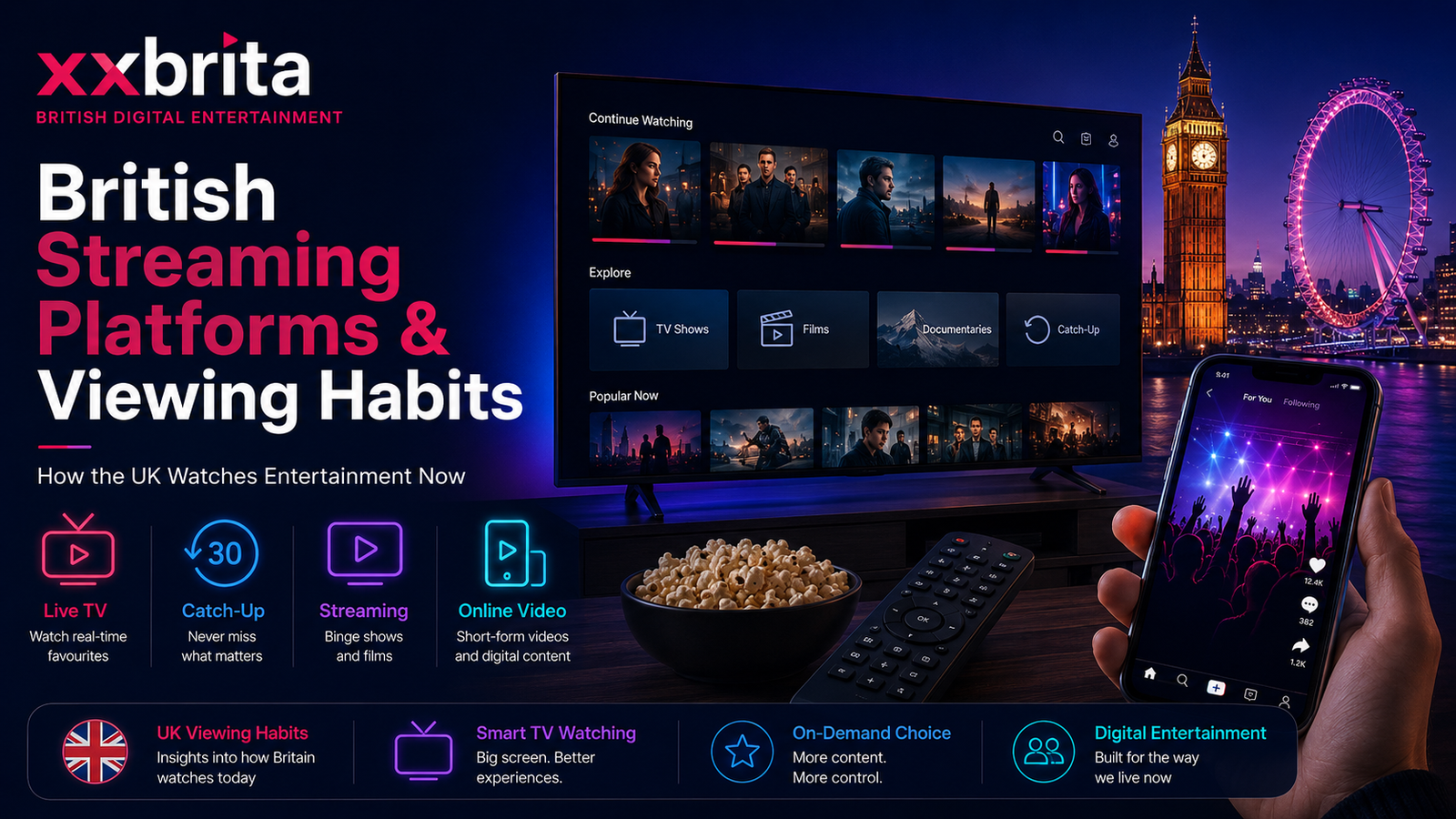
British entertainment has changed because British viewers have changed. People still watch television, but they no longer watch it in one fixed way. A viewer can start with live TV, move to a catch-up app, open a streaming platform, check YouTube, scroll through social media clips, and then search online to understand why a show, celebrity, or trend is suddenly everywhere.
That is why xxbrita covers British streaming platforms and viewing habits as a core part of UK digital entertainment. Modern entertainment is not just about what is on TV tonight. It is about where people watch, how they discover shows, what they share online, and why certain stories become part of a bigger conversation.
In the UK, viewing habits now sit between old and new. Live television still matters. Catch-up apps are part of normal life. Streaming services have changed what people expect. YouTube and short-form video are now major entertainment spaces. Social media has turned TV moments into public conversations.
This article explains how British viewers watch entertainment today, why streaming has become so important, and how xxbrita fits into this new digital entertainment world.
Streaming Is Now Part of Everyday British Entertainment
Streaming used to feel like an extra option. Now it is part of everyday viewing. People use streaming to catch up on missed shows, watch new dramas, discover documentaries, follow reality TV, revisit older series, and enjoy entertainment at a time that suits them.
The biggest change is control. Viewers do not always want to wait for a fixed broadcast time. They want to watch after work, during a commute, on a weekend, late at night, or while relaxing with family. This flexible habit has made streaming feel natural.
Ofcom’s Media Nations 2025 report looks at UK audience behaviour across TV, online video, radio, and audio, showing how media consumption is now spread across more platforms rather than staying in one traditional place.
For xxbrita readers, this matters because British entertainment is now a mix of platforms. A show might air on television, stream later, trend on social media, and then appear in online searches. The content journey is connected.
Live TV Has Not Disappeared
Even though streaming has grown, live TV is still important in the UK. People continue to watch live television for news, sport, big entertainment shows, reality TV finals, major interviews, national events, and moments where everyone wants to watch together.
Live TV gives people a shared experience. When a major event happens, viewers can react at the same time. That shared feeling is hard to replace. It is one reason live finals, football matches, award shows, royal events, and breaking news still pull attention.
The difference is that live TV no longer stands alone. A viewer might watch a programme live and then go online to read reactions. They might watch a clip on social media the next morning. They might search for a contestant, presenter, actor, or guest. They might then watch the full episode on catch-up.
This is why a platform like xxbrita should cover both traditional TV and digital reaction. The entertainment story often continues long after the programme ends.
Catch-Up Apps Have Become Normal
Catch-up viewing is one of the biggest changes in UK entertainment. Missing a programme is no longer a problem in the same way it used to be. Viewers expect broadcaster apps and streaming platforms to make shows available later.
This has changed how people plan their viewing. Many viewers no longer build their evening around one programme. They save shows for later, watch several episodes together, or catch up when they have time.
Catch-up apps are especially useful for busy households. Someone working late can still watch a drama. A parent can watch after the children are asleep. A student can catch up on a comedy series at the weekend. A fan can rewatch an important scene after seeing online reactions.
This habit also helps shows grow after the first broadcast. A programme may not become popular immediately, but it can gain attention as people discover it through clips, reviews, recommendations, or social media.
BARB’s weekly top 50 shows dashboard now covers viewing across broadcast channels and SVOD services, and it notes that reporting has evolved because people watch shows at times that suit them and across different devices.
That is a strong sign of how viewing measurement has changed. The audience is still there, but the way people watch is more flexible.
ITVX Shows the Growth of Broadcaster Streaming
Broadcaster streaming is a major part of the UK entertainment market. Services connected to well-known TV brands are not only catch-up tools anymore. They are becoming full streaming destinations with boxsets, previews, films, live events, exclusive shows, and archive content.
ITVX is a good example of this shift. ITV announced that ITVX hit 3.3 billion streams by November 30, 2025, passing its full-year 2024 streaming total with a month still left in the year. ITV also said ITVX had gathered nearly 10 billion streams since launch.
This shows that British viewers are comfortable using broadcaster streaming platforms, especially when the content is easy to access and connected to shows people already know. Reality TV, drama, sport, soaps, and big entertainment brands can all drive people to streaming.
For xxbrita, ITVX-style growth is important because it proves that UK entertainment is not only about global subscription platforms. British broadcaster platforms still have strong value when they offer familiar shows, trusted brands, and easy viewing.
Channel 4 and Younger Streaming Audiences
Younger viewers are helping shape the future of streaming. Many people aged 16 to 34 are more comfortable watching through apps, phones, smart TVs, and online platforms. They may still watch live television, but they often expect content to be available on demand.
Channel 4 reported that among its 16-34 viewers, 53% of their overall Channel 4 viewing in 2025 came through streaming. Channel 4 described this as the first time a major commercial broadcaster had passed that full-year tipping point for young viewers, where streaming made up more viewing than linear TV.
This is an important trend for any British entertainment website. Younger audiences do not always separate “TV” from “digital.” To them, a show is simply something they watch wherever it is easiest. They might find it through a social clip, watch it on a streaming app, and then join the discussion online.
xxbrita can serve this audience by covering shows, creators, online reactions, viral clips, and streaming habits in one connected way.
YouTube Is Also Part of UK Viewing
When people talk about streaming, they often think of subscription services or broadcaster apps. But YouTube is now a major part of everyday viewing too. It is not only used for short clips. Many people watch interviews, podcasts, reviews, reaction videos, music, explainers, documentaries, creator content, and long-form entertainment.
Ofcom’s 2025 reporting highlighted YouTube’s growing role in UK media habits, including the way more YouTube viewing is happening on TV sets inside the home. The report said the proportion of time spent watching YouTube at home via a TV set increased from 34% in 2023 to 41% in 2024.
This matters because the living room screen is no longer only for traditional television. A family might watch a broadcaster app, a subscription service, and YouTube on the same TV. For the viewer, the platform matters less than the content.
That is one reason xxbrita focuses on British digital entertainment, not only television. Entertainment now includes creators, online video, podcasts, clips, social media, and streaming platforms.
Viewers Want Choice, But Choice Can Feel Too Much
More platforms means more choice. That sounds good, but it can also feel tiring. Many people spend more time scrolling than watching. They open one app, then another, then another. They check trailers, reviews, recommendations, and trending lists before deciding what to watch.
This is a common part of modern streaming life. People want choice, but they also want help choosing.
That is where entertainment guides are useful. A helpful article can explain what a show is about, who stars in it, where it is available, what kind of mood it suits, and why people are talking about it. Readers do not always want a long academic review. They want a normal explanation that helps them decide.
xxbrita can publish useful guides such as:
- Best British dramas to stream this week
- New UK shows people are talking about
- Where to watch popular British TV online
- Reality TV shows trending in the UK
- Streaming documentaries worth watching
- British comedy shows to revisit
- New films and series available for UK viewers
These articles naturally support the xxbrita homepage because they all connect to the wider topic of British digital entertainment.
Streaming Has Changed How Shows Become Popular
In the past, a programme often became popular because it had a strong TV slot, heavy promotion, or word of mouth. Those things still matter, but streaming and social media have changed the process.
Now a show can grow in many ways. A clip might go viral. A celebrity might mention it. A scene might become a meme. A review might bring attention. A fan discussion might push more people to watch. A platform recommendation might place the show in front of new viewers.
This means popularity can build slowly or suddenly. Some shows become big on release day. Others gain attention weeks later. Some become popular again years after they first aired because a new audience discovers them online.
For xxbrita, this creates strong article opportunities. A show is not only a release date or a cast list. It can become a wider cultural moment. A good entertainment article should explain that journey in a clear way.
For example, an article about a trending drama could link naturally to related content like UK TV and streaming trends or British celebrity profiles if readers want to explore the cast or the wider viewing habits behind the show.
British Streaming Is Not Only About Paid Subscriptions
A lot of people think streaming means paid subscriptions, but the UK streaming world is broader than that. Viewers use a mix of free broadcaster apps, paid subscription platforms, video-sharing services, smart TV channels, catch-up services, and social media video.
This mix matters because not every viewer wants another monthly bill. Some people prefer free ad-supported services. Others pay for one or two platforms and use free apps for the rest. Some families rotate subscriptions depending on what they want to watch.
This behaviour is practical. People are more careful about costs, especially when several platforms compete for attention. A viewer might subscribe for a particular series, cancel later, then return when another show arrives.
That means “what to watch” content should also think about access. Readers want to know whether a programme is free, paid, included with a subscription, available on catch-up, or only there for a limited time.
A good xxbrita streaming guide should always make that easy to understand.
Smart TVs Have Made Streaming Easier
Smart TVs have played a big role in changing viewing habits. Streaming used to feel like something people did mainly on laptops, tablets, or phones. Now many viewers open streaming apps directly from their TV.
This makes digital entertainment feel more like normal television. The difference between a broadcast channel and a streaming app is smaller when both are on the same screen. Viewers simply choose what they want.
This also helps older viewers. Not everyone wants to connect cables, use extra devices, or watch on a small screen. Smart TVs make catch-up and streaming easier for households that still prefer the living room experience.
Channel 5’s help centre, for example, lists 5 as available across a range of smart TVs, set-top boxes, streaming devices, mobile devices, and its website.
The bigger point is simple: streaming is no longer hidden away. It is now part of the main TV experience.
Social Media Is Now a Viewing Companion
People do not only watch entertainment. They react to it. Social media has become a companion to TV and streaming. Viewers post opinions, share clips, follow hashtags, comment on scenes, and search for more information while or after watching.
This is especially common with reality TV, drama twists, documentaries, major interviews, live events, and celebrity stories. A strong moment can become a trending topic within minutes.
For entertainment websites, this means articles should not ignore audience reaction. Sometimes the reaction is the reason a topic becomes popular. Readers may search because they saw people talking about something but do not understand the full context.
xxbrita can help by writing clear explainers such as:
- Why a UK TV moment is trending
- What happened in a viral interview
- Why viewers are reacting to a reality TV episode
- Who is the celebrity people are searching for
- What a trending British phrase or meme means
These topics connect streaming, television, celebrities, and digital culture in a natural way.
Different Age Groups Watch in Different Ways
British viewing habits vary by age, lifestyle, and household. Younger viewers may be more likely to discover entertainment through social media or YouTube. Families may use a mix of children’s content, live TV, and streaming. Older viewers may still prefer live channels but also use catch-up apps for convenience.
There is no single British viewer anymore. There are many viewing habits happening at once.
This matters for xxbrita’s tone. Content should be simple enough for casual readers but detailed enough to be useful. Not every reader knows what BVOD, SVOD, catch-up, or on-demand means. A good article should explain things normally.
For example:
BVOD means broadcaster video on demand, such as streaming from a broadcaster.
SVOD means subscription video on demand, where viewers usually pay monthly.
Catch-up means watching a programme after it has already aired.
On-demand means watching whenever the viewer chooses.
Using simple explanations helps readers feel included instead of confused.
Why “Where to Watch” Guides Are Useful
One of the most common entertainment questions is simple: where can I watch it?
This question matters because shows are spread across different platforms. One series might be on a broadcaster app. Another might be on a paid service. A film may move between platforms. A documentary may only be available for a limited time. A live event may be shown in one place and highlights somewhere else.
A helpful “where to watch” guide should give clear information without making the reader search again. It should explain the platform, access type, release timing, and any useful details.
For xxbrita, this type of content can become a strong supporting category. It helps readers quickly, and it connects naturally to TV, streaming, films, celebrity profiles, and entertainment news.
What British Viewers Expect Now
Modern UK viewers expect entertainment to be flexible, easy to find, and available across devices. They also expect quick information. If a show is trending, they want to know why. If a celebrity is suddenly everywhere, they want background. If a platform releases a new drama, they want to know if it is worth watching.
This creates a clear role for xxbrita.
The website should act like a helpful guide, not a complicated media textbook. It should explain British entertainment in normal English. It should help readers understand what is happening across TV, streaming, social media, and online culture.
Good xxbrita content should answer:
- What is this show or topic?
- Why are people talking about it?
- Where can UK viewers watch it?
- Who is involved?
- What is the background?
- Is it connected to a wider trend?
- What should readers explore next?
That kind of structure builds trust because it respects the reader’s time.
How This Topic Supports the xxbrita Homepage
The xxbrita homepage is the main pillar for British digital entertainment. This article supports that pillar by focusing on one major part of the topic: how British viewers watch entertainment through streaming platforms, catch-up apps, online video, and digital habits.
From here, xxbrita can build a strong content cluster around related articles such as:
UK TV and streaming trends
UK Viral Trends Explained
British celebrity profiles
Where to watch British TV shows online
Best British shows to stream this month
How social media changes UK entertainment
Each article should link naturally when the topic is closely related. That keeps the website clean for readers and helps search engines understand the structure.
The Future of British Streaming Habits
British streaming habits will keep changing. More people will watch through smart TVs. More viewers will use several platforms. More shows will become popular because of social media. YouTube and creator content will keep sitting beside traditional TV. Broadcaster streaming apps will continue competing for attention. Subscription platforms will need to prove their value as households become more selective.
But one thing is clear: British entertainment is now digital, flexible, and connected.
People still love shows, films, celebrities, music, interviews, documentaries, comedy, and live moments. What has changed is how they find them and how they talk about them.
That is the space xxbrita is built for. It gives readers a simple way to follow British entertainment across TV, streaming, online video, celebrity culture, and digital trends. As viewing habits continue to shift, xxbrita can help readers understand what is worth watching, what is trending, and why it matters in the UK entertainment world.
