
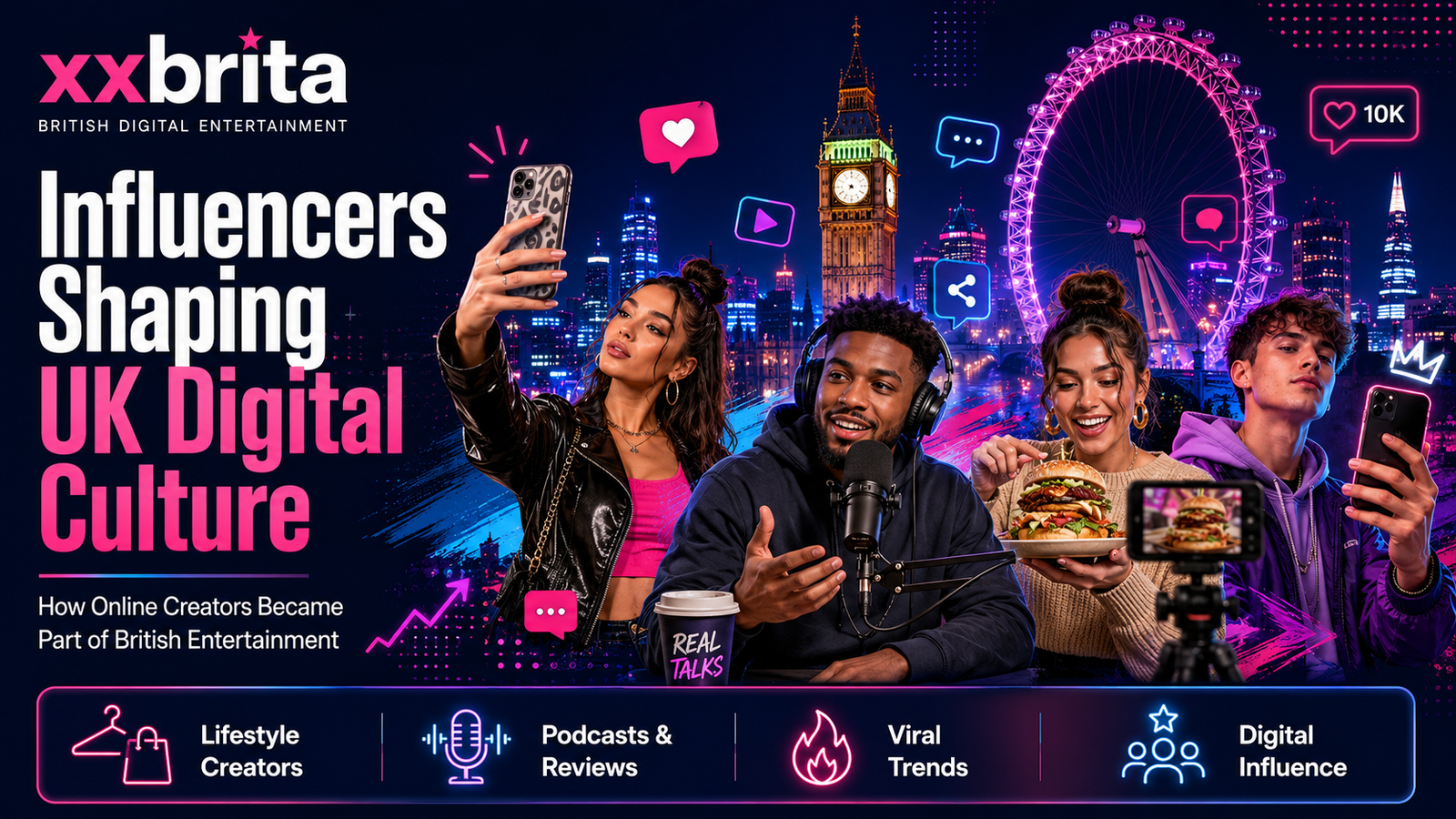
Influencers are now a major part of British digital entertainment. A few years ago, many people saw influencers as people who only posted photos, promoted products, or shared lifestyle updates online. Today, the picture is much wider. Influencers can be presenters, podcasters, comedians, reviewers, fashion voices, beauty creators, gamers, food personalities, music commentators, family vloggers, fitness creators, and online entertainers with loyal audiences.
For xxbrita, influencers are important because they sit at the centre of modern UK digital culture. They are not only posting content. They are shaping trends, creating conversations, introducing audiences to new shows, helping music spread, making products popular, turning everyday moments into viral clips, and sometimes moving from social media into television, streaming, radio, podcasts, live events, and brand campaigns.
British entertainment is no longer controlled only by TV channels, newspapers, magazines, or record labels. Audiences now discover people through TikTok, YouTube, Instagram, podcasts, livestreams, short videos, and online communities. A creator can build a strong following without first appearing on television. A viral clip can introduce a new personality to millions of people. A podcast conversation can shape public opinion. A short review can influence what people watch, buy, wear, cook, or listen to.
That is why influencers belong in the xxbrita content map. They connect UK entertainment news, British celebrity profiles, viral trends, streaming culture, and social media conversations in one place.
What Is an Influencer?
An influencer is someone who has built an audience and can affect what people notice, discuss, watch, buy, or believe online. This influence can come from personality, expertise, humour, style, honesty, creativity, or simply the ability to make content people enjoy.
Not every influencer is famous in the traditional sense. Some have millions of followers. Others have smaller but highly loyal communities. A creator with a niche audience can sometimes have more real influence than a celebrity with a much larger but less engaged following.
In UK digital culture, influencers may be known for:
- Fashion and beauty
- TV reactions and entertainment commentary
- Comedy sketches
- Food reviews
- Fitness and health routines
- Parenting and family life
- Gaming and livestreaming
- Music reactions
- Football and sports culture
- Lifestyle advice
- Travel and local UK content
- Podcasts and interviews
- Social issues and personal storytelling
- Short-form video trends
- Product recommendations and reviews
The key point is simple: influencers create content that people choose to follow. Their power comes from attention and trust.
Why Influencers Matter in British Digital Entertainment
Influencers matter because audiences spend a large part of their entertainment time online. DataReportal reported that the UK had 67.8 million internet users at the start of 2025, with internet penetration at 97.8%. It also reported 54.8 million social media user identities in the UK in January 2025, equal to 79.0% of the total population. These figures show how deeply online platforms are connected to everyday life in Britain.
When so many people are online, entertainment naturally moves there too. A person may not watch a full TV show every night, but they may watch creator videos, scroll through social clips, listen to a podcast, follow a fashion influencer, or see a creator reacting to a trending topic.
This means influencers are not separate from entertainment. They are part of it.
A TV show can become more popular because creators discuss it. A celebrity story can spread because influencers react to it. A song can become a trend because creators use it in short videos. A fashion item can sell out because a trusted creator wears it. A food place can become busy because a local reviewer posts about it. A public debate can grow because influencers explain it in a way that younger audiences understand.
That is the kind of British digital culture xxbrita is built to cover.
Influencers Are the New Media Personalities
Traditional media personalities usually became known through television, radio, newspapers, or magazines. Influencers often build their audience the other way around. They start online, grow a following, and then sometimes move into mainstream media.
A TikTok creator may become a podcast host.
A YouTuber may present a documentary.
A fashion influencer may appear on television.
A comedian may sell live event tickets.
A gamer may build a business around livestreaming.
A lifestyle creator may publish a book.
A reality TV contestant may become a full-time influencer after the show ends.
This movement between platforms is now normal. Audiences do not always care where someone started. They care whether the content feels interesting, useful, funny, honest, or entertaining.
This is why influencer profiles can sit naturally beside British celebrity profiles on xxbrita. Many influencers are now part of the same public entertainment conversation as actors, presenters, musicians, and reality TV figures.
YouTube, TikTok and Instagram Changed the Path to Fame
Influencers became powerful because platforms changed how audiences discover people. In the past, a person often needed a gatekeeper. They needed a TV producer, casting team, record label, magazine editor, or radio station to give them exposure. Now, a creator can upload directly to an audience.
That does not mean success is easy. It takes consistency, timing, creativity, and a strong understanding of what people want to watch. But the route is more open than before.
YouTube is especially important because it supports both short and long content. Ofcom highlighted YouTube’s growing role in UK media habits, noting that audiences are increasingly turning to the platform and that it has become the UK’s second most-watched service behind the BBC and ahead of ITV in Ofcom’s reporting.
Reuters, reporting on Ofcom’s Online Nation 2025 findings, said UK adults spent around four and a half hours online daily, while Britons spent an average of 51 minutes a day watching YouTube on smartphones, tablets, and PCs in 2025. It also reported that YouTube was used by 94% of UK online adults in that report.
For influencers, this matters because YouTube is not just a video site. It is a search engine, entertainment platform, education space, review hub, podcast home, and creator business tool. TikTok and Instagram also help creators grow quickly through short-form content, trends, visual storytelling, and direct audience interaction.
Why Audiences Trust Influencers
Influencer culture is built on trust. People follow creators because they feel connected to them. That connection may come from shared humour, similar background, useful advice, honest reviews, personal stories, or a strong sense of personality.
A viewer may trust a creator because they feel more relatable than a traditional celebrity. An influencer might film in their kitchen, talk casually, show real-life routines, admit mistakes, or speak in a way that feels close to their audience. This can make their content feel personal.
That trust is valuable. It is also why influencer marketing exists. Brands want to work with creators because audiences often listen to recommendations from people they already follow.
But trust must be handled carefully. If creators promote products without being clear, audiences can feel misled. In the UK, the ASA says influencer marketing must be obviously identifiable, labels must be clear, and creators should not rely only on a bio or previous posts to explain commercial relationships.
The CMA also says content creators must clearly label content as an advert or ad when they have been incentivised to post, including cases involving payment, gifts, or promotion of their own business.
This is important for xxbrita because influencer coverage should be balanced. Influencers are shaping culture, but transparency still matters.
Different Types of UK Influencers
British influencer culture is not one single thing. There are many types of creators, and each one shapes digital culture differently.
Lifestyle Influencers
Lifestyle influencers share everyday routines, home life, fashion, wellness, travel, relationships, shopping, food, or personal updates. Their content often feels relaxed and familiar. Audiences follow them because they like their taste, tone, or way of living.
Lifestyle creators can influence buying decisions, trends, and social conversations. A simple recommendation from a trusted creator can introduce thousands of people to a product, place, habit, or idea.
Fashion and Beauty Creators
Fashion and beauty influencers are a strong part of UK digital culture. They shape style trends, review products, share routines, explain looks, and influence what audiences buy or try. They can make high-street fashion feel exciting, introduce smaller brands, and make beauty content feel more personal.
Some focus on luxury. Others focus on affordable finds, modest fashion, skincare, hair care, makeup tutorials, or body confidence. Their strength is often visual storytelling.
Comedy and Entertainment Creators
Comedy creators are especially important in British digital culture because UK audiences love humour, sarcasm, reactions, and relatable jokes. A short comedy sketch can spread quickly if it captures something people recognise from everyday life.
These creators often shape memes, phrases, and viral moments. Some later move into podcasts, live shows, TV, or presenting.
Food and Local Review Creators
Food influencers and local reviewers can have a strong effect on restaurants, cafés, takeaways, markets, and hidden spots. A short video about a place can bring huge attention, especially if the review feels honest and visually appealing.
In the UK, food content often connects with local identity. A creator reviewing spots in London, Manchester, Birmingham, Leeds, Glasgow, Cardiff, or Liverpool can build a loyal audience because people want recommendations close to home.
Gaming and Livestreaming Creators
Gaming creators are a major part of online entertainment. They stream gameplay, review games, create reaction content, build communities, and often develop strong fan relationships. Some viewers watch gaming content not only for the game, but for the creator’s personality.
Livestreaming makes the relationship feel immediate because audiences can comment, react, and become part of the moment.
Family and Parenting Influencers
Family influencers share parenting routines, home life, school runs, family days out, product recommendations, emotional stories, and practical advice. These creators often build trust because their content feels personal and relatable.
This area needs careful coverage because family content can involve children and private life. xxbrita should write about public creator work respectfully and avoid unnecessary personal details.
Music and Culture Creators
Music creators help songs, artists, performances, and concerts spread online. They may review new releases, react to performances, explain music trends, share festival content, or introduce audiences to emerging artists.
A song can become popular because creators use it in videos. A performance can gain attention because reaction channels discuss it. A festival moment can spread because creators share clips.
This connects naturally with xxbrita’s future content on British music and entertainment updates.
Influencers and Viral Trends Work Together
Influencers are often the reason a trend spreads. They may start the trend, join it early, explain it, remix it, or make it funny enough for others to copy. Many viral trends become popular because creators turn them into content formats.
A trend may begin with:
- A sound
- A dance
- A phrase
- A TV reaction
- A meme
- A celebrity moment
- A fashion style
- A food review
- A challenge
- A short clip
- A funny observation
- A public debate
Influencers help these trends travel because they already have audiences waiting for new content. If many creators use the same sound, joke, format, or topic, the trend becomes harder to ignore.
This is why xxbrita should link influencer content naturally with UK viral trends explained. Viral trends and influencer culture are closely connected.
Influencers Help Shape What People Watch
Creators now influence what people watch on TV and streaming platforms. A creator might recommend a drama, review a documentary, react to a reality TV episode, explain a confusing scene, or make a funny video about a popular show.
This can push more people toward the original content.
A person may not plan to watch a series, but then they see several creators talking about it. They watch a clip, search the title, read an article, and eventually start the show. That journey is common in modern entertainment.
Influencers are especially powerful when they make content feel easier to understand. A creator might explain why a show is popular, summarise a reality TV storyline, or react to a streaming release in a way that makes people curious.
For a wider look at this viewing shift, readers can visit British streaming platforms and viewing habits on xxbrita.
Influencers and the Business of Attention
Influencer culture is also a business. Creators may earn money through brand deals, affiliate links, ads, sponsorships, merchandise, subscriptions, events, courses, books, podcasts, and platform revenue. Some become full media businesses with teams, managers, editors, agents, and brand partnerships.
This professional side does not make the content less real, but it does mean transparency matters. When a creator is paid to promote something, audiences should be able to tell.
The ASA’s influencer guidance says advertising content posted by influencers should be clear about what it is. The CMA’s social media endorsement guidance also highlights the importance of upfront and prominent disclosures when posting reels, stories, or other video content.
For readers, this means they should enjoy influencer content but also understand when something is entertainment, when it is personal opinion, and when it is advertising.
For xxbrita, this means influencer articles should not blindly praise every creator campaign. They should explain influence in a balanced way.
Why Micro-Influencers Matter
Not every important influencer has millions of followers. Micro-influencers can shape culture within smaller communities. They may focus on a city, hobby, fashion style, food scene, parenting niche, football club, music genre, beauty routine, or local audience.
Their power often comes from closeness. A micro-influencer may reply to comments, know their audience well, and feel more trustworthy because their content is specific.
For example, a local food creator in Manchester may have more influence over where followers eat than a national celebrity. A small fashion creator may strongly influence a specific style community. A niche TV reviewer may shape discussion around a show among loyal fans.
xxbrita can cover both big-name creators and smaller creators when they are relevant to British digital culture.
Influencers Can Move Into Mainstream Entertainment
One of the most interesting changes in UK entertainment is how influencers move into mainstream media. A creator may start with short videos and later appear on TV, host a podcast, launch a live tour, publish a book, join a panel show, or collaborate with a broadcaster.
This shows that digital fame is no longer separate from traditional fame. The two now overlap.
A creator with a loyal audience already brings attention. Media companies understand that. If someone has built trust online, they may be a strong fit for presenting, commentary, entertainment formats, or branded content.
This also means xxbrita’s influencer coverage can link naturally with UK presenters and media personalities. Some influencers become presenters, and some presenters become influencers.
The Good Side of Influencer Culture
Influencer culture can be positive. It gives new voices a chance to be heard. It allows people outside traditional media to build careers. It can make entertainment more diverse, more personal, and more connected to everyday life.
Influencers can help audiences discover:
- New music
- Small businesses
- Local places
- Independent fashion brands
- Useful products
- Mental health conversations
- Body positivity
- Cultural discussions
- Creative hobbies
- New shows and films
- Community events
- Personal stories
Creators can also speak to audiences who may not feel represented by traditional media. They can bring regional voices, different backgrounds, different accents, and different experiences into the entertainment space.
That is one reason influencer culture matters in Britain. It opens the door for more kinds of public personalities.
The Difficult Side of Influencer Culture
Influencer culture also has problems. Content can feel too commercial. Some creators may promote products too often. Some trends can create pressure around beauty, money, lifestyle, body image, or success. Some audiences may compare their real lives to edited online content.
There is also the problem of misinformation. A creator may speak confidently about a topic without enough knowledge. This is especially risky in areas like health, money, legal issues, or serious public matters.
Financial promotions are one example where regulators have shown concern. In 2024, Reuters reported that the UK Financial Conduct Authority warned that influencers promoting financial products without regulatory approval could face criminal charges, and said social media promotions should be fair, clear, and not misleading.
This does not mean influencer content is bad. It means readers should think carefully, and creators should understand their responsibility.
xxbrita can cover influencer culture with this balance: interesting, but not careless.
How to Write a Good Influencer Profile
A good influencer profile should help readers understand why a creator matters. It should not just list follower counts or repeat social media captions. It should explain their content style, audience, platform, public image, and connection to current trends.
A strong xxbrita influencer profile could include:
- Who the influencer is
- What platform they are known for
- What kind of content they create
- Why people follow them
- Whether they have moved into TV, podcasts, events, music, fashion, or business
- Why they are currently being searched
- Any public trend or viral moment connected to them
- Related xxbrita articles
The tone should be natural. It should feel like a helpful explanation, not a robotic biography.
Why Influencer Content Supports the xxbrita Homepage
The xxbrita homepage is the main pillar page for British digital entertainment. Influencer content supports that pillar because influencers are part of almost every modern entertainment conversation.
They shape trends.
They review shows.
They promote music.
They react to celebrities.
They create viral clips.
They build communities.
They move into podcasts and presenting.
They affect fashion, lifestyle, food, gaming, and entertainment choices.
This article naturally connects with:
British celebrity profiles
UK presenters and media personalities
UK viral trends explained
UK TV and streaming trends
British streaming platforms and viewing habits
How social media changes UK entertainment
These links should be used only where they genuinely help the reader continue with a similar topic.
The Future of Influencers in UK Digital Culture
Influencers will continue to shape British digital culture. Some will remain online creators. Others will become presenters, podcasters, authors, business owners, performers, or mainstream celebrities. More creators will build careers across several platforms instead of relying on one app.
At the same time, audiences will become smarter. They will expect clearer advertising labels, more honest recommendations, better content quality, and creators who feel genuine. Trust will matter even more.
For xxbrita, this is a strong content area. Influencers connect entertainment, celebrity culture, streaming, social media, viral trends, lifestyle, and British online habits. They show how modern fame works and how audiences now discover the people they follow.
Influencer culture is not just about likes and followers. It is about attention, trust, creativity, community, and the way people in Britain experience entertainment online. That is why influencers are one of the clearest signs of where UK digital culture is heading.
