
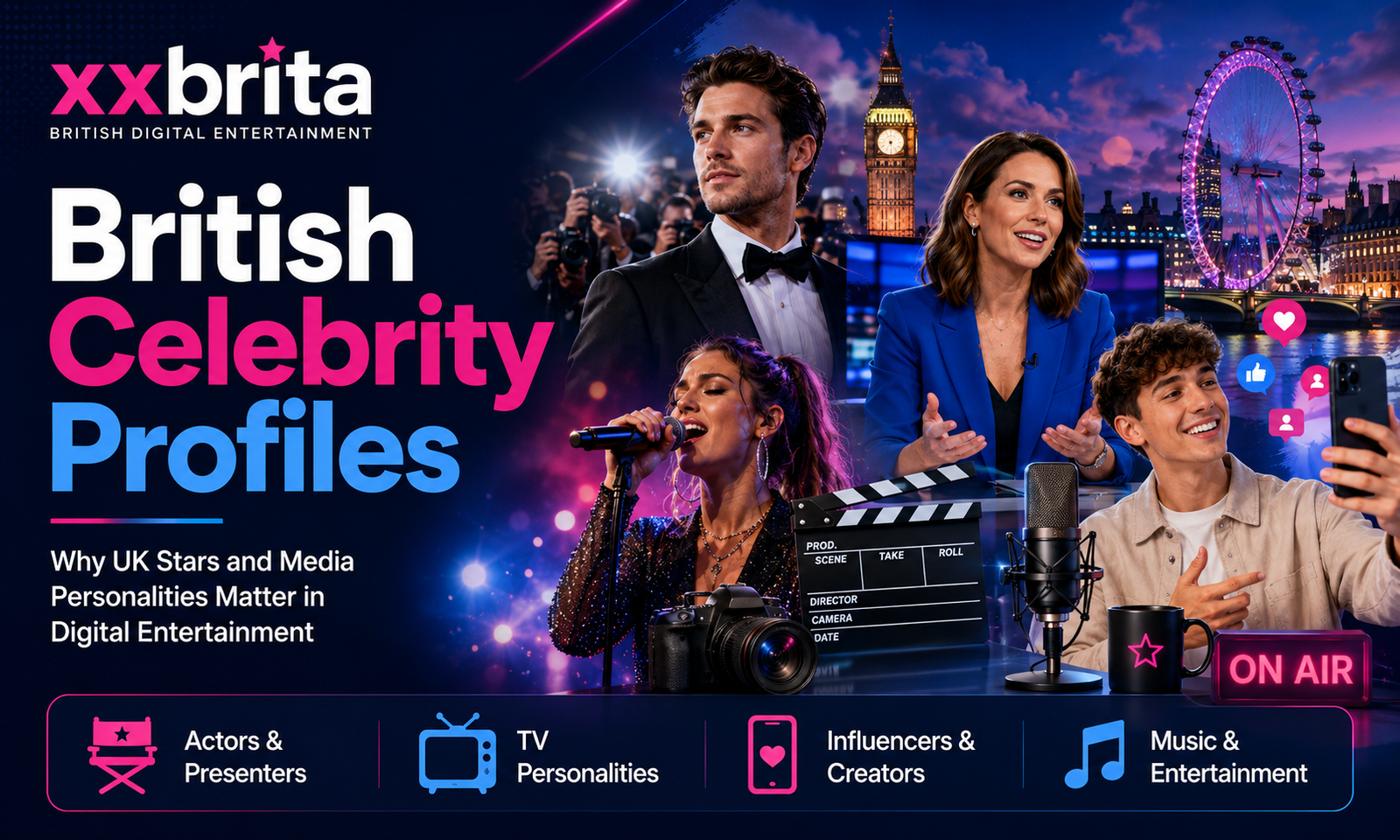
British celebrity culture has changed a lot. In the past, people mostly discovered celebrities through television, newspapers, magazines, radio, films, and music charts. Today, the picture is much bigger. A British actor can become popular through a streaming series. A presenter can trend after a live TV moment. A singer can return to public attention through a viral clip. A reality TV star can build a full media career from one show. A social media creator can become just as recognisable to younger audiences as someone on traditional television.
That is why xxbrita covers British celebrity profiles as an important part of British digital entertainment. Celebrity interest is no longer only about fame. It is about the stories people search for, the careers they follow, the shows they watch, the interviews they discuss, and the online moments that turn public figures into trending topics.
A good celebrity profile should do more than repeat a few basic facts. It should help readers understand who the person is, what they are known for, why people are searching for them, and how they connect to the wider entertainment world. Readers want clear information, but they also want it written in normal English. They do not want robotic sentences, empty gossip, or confusing wording.
This article explains why British celebrity profiles matter, what makes them useful for readers, and how xxbrita can cover UK stars, presenters, influencers, actors, musicians, and online personalities in a clear and respectful way.
Celebrity Culture Is Now Digital
Celebrity culture used to move more slowly. A person might appear in a TV show, get covered in a newspaper, appear on a magazine cover, or give an interview on radio. Audiences still followed their favourite stars, but the conversation was more controlled by traditional media.
Now, things move much faster.
A celebrity can become a trending search topic within minutes. One interview, one outfit, one performance, one social media post, one award show appearance, or one TV scene can create a wave of attention. People then search to understand who they are, what happened, and why everyone is talking about them.
This is part of a bigger shift in how the UK uses media. Ofcom’s Media Nations 2025 report shows how UK audiences now move across broadcast TV, streaming, online video, radio, and digital platforms rather than relying on one single media habit.
For xxbrita, that matters because celebrities are no longer connected to only one platform. A public figure may be known from television, but their popularity may grow through TikTok clips, YouTube interviews, Instagram posts, streaming shows, podcasts, and search interest. A modern celebrity profile needs to understand that full digital picture.
Why People Search for Celebrity Profiles
People search for celebrity profiles for many reasons. Sometimes they already know the name but want more background. Sometimes they see a person on a show and want to know who they are. Sometimes a celebrity trends online and people want to understand the story. Sometimes a public figure appears in a new series, interview, film, podcast, or live event, and readers want a simple explanation.
Common questions include:
Who is this person?
What are they famous for?
Why are they trending?
What shows or films have they appeared in?
Are they a presenter, actor, singer, creator, or reality TV personality?
What is their career background?
What is their connection to a current story?
Where have I seen them before?
What are they working on now?
A strong British celebrity profile answers these questions clearly. It does not need to sound dramatic. It does not need to exaggerate. It simply needs to help the reader understand the person and the reason for public interest.
This is why celebrity profiles can become a strong part of the xxbrita content structure. They naturally connect with UK entertainment news, TV shows, streaming releases, viral trends, social media culture, and lifestyle stories.
British Celebrities Are Not All Famous in the Same Way
One mistake many entertainment websites make is treating all celebrities the same. British celebrity culture is wider than one group of famous people. There are different types of public figures, and each one needs a slightly different kind of profile.
Some celebrities are actors known for dramas, films, comedies, or theatre. Some are television presenters who become familiar because viewers see them regularly. Some are musicians with loyal fanbases. Some are comedians who build strong public personalities through live shows, panel programmes, podcasts, or clips. Some are reality TV stars whose fame comes from public reaction and personality. Some are influencers and creators who became known online before appearing in mainstream media.
A useful xxbrita article should understand the difference.
For an actor, readers may want to know about roles, career path, performances, and upcoming projects.
For a presenter, they may want to know about TV work, public style, and shows hosted.
For a musician, they may want background on songs, albums, performances, and public appearances.
For a reality TV personality, they may want context around the show, public reaction, and what happened after it aired.
For an influencer, they may want to know what platform they are known for and why their audience follows them.
This helps the article feel more human and more useful.
The Rise of Digital-First Personalities
One of the biggest changes in British entertainment is the rise of digital-first personalities. These are people who become known through social media, YouTube, TikTok, Instagram, podcasts, streaming, or online communities before they become part of traditional media.
For younger audiences especially, digital creators can feel just as important as television stars. They may not appear on prime-time TV every week, but they have strong audience relationships. Their followers watch their videos, listen to their podcasts, buy tickets to their events, comment on their posts, and share their content.
DataReportal reported that the UK had 67.8 million internet users at the start of 2025, with internet penetration at 97.8%. It also reported 54.8 million social media user identities in January 2025, equal to 79.0% of the population. These figures show why online platforms have become such an important space for entertainment and public attention.
This does not mean every online creator is a traditional celebrity, but it does mean the meaning of celebrity has changed. Public recognition can now come from many places. A creator can become known through comedy videos, fashion content, lifestyle posts, gaming, music reactions, commentary, beauty tutorials, fitness, podcasts, or short-form entertainment.
xxbrita can cover these figures as part of British digital culture, especially when they connect to wider entertainment conversations.
TV Still Builds Familiar Faces
Even with the rise of digital platforms, television still matters. British TV has always created familiar faces. Presenters, actors, judges, contestants, comedians, and guests often become part of everyday conversation because viewers see them regularly.
TV gives public figures a different kind of visibility. A presenter who appears every morning can become part of people’s daily routine. An actor in a popular drama can become widely recognised after one strong role. A contestant on a reality show can gain attention very quickly if viewers react strongly to their personality or story.
Live TV can also make celebrity moments spread faster. When something happens during a live broadcast, people react instantly. Clips appear online. Names begin trending. Readers search for more background. What started as a TV moment becomes a digital story.
This connects directly with xxbrita’s article on UK TV and streaming trends, where we explain how British viewers move between live television, catch-up apps, streaming platforms, and online reactions.
Streaming Has Created New British Stars
Streaming has changed celebrity culture because it gives actors, presenters, documentary subjects, and creators new ways to reach audiences. A person can become widely known after appearing in a streaming drama, documentary, comedy, or reality series. Sometimes the audience discovers them all at once because a full season becomes popular quickly.
Streaming also gives older work a second life. An actor may become newly popular because viewers discover a previous role on a platform. A documentary subject may become a public name after a series gains attention. A presenter may reach a wider audience when a show becomes available on demand.
This is why celebrity profiles should not only focus on traditional fame. They should also explain how streaming, catch-up viewing, and online discovery have shaped public interest.
For example, if a British actor appears in a new streaming series, readers may search for their past roles, age, career background, interviews, and other shows. A good xxbrita profile can bring that information together in one clear article.
For more background on this shift, readers can visit British streaming platforms and viewing habits, which explains how UK audiences now watch across live TV, broadcaster apps, streaming services, YouTube, and social media.
Why Celebrity Profiles Need Context
A celebrity profile without context can feel empty. Readers usually arrive because something has made them curious. A profile should explain that reason clearly.
For example, a profile may be connected to:
- A new TV role
- A streaming release
- A viral interview
- A reality TV appearance
- A music release
- A public event
- An award show
- A podcast appearance
- A social media trend
- A film premiere
- A major career moment
- A public conversation
The article should make that connection easy to understand. It should not simply list facts. It should explain why the person is relevant now.
This is especially important for search traffic. Someone may not be searching for a full biography. They may be searching because the person appeared on a show last night, made a comment in an interview, or became part of a trending topic. The profile should answer the immediate question while also giving useful background.
The Difference Between Useful Profiles and Gossip
Celebrity content can easily become lazy if it only focuses on rumours, personal drama, or unsupported claims. xxbrita should take a better approach.
A useful celebrity profile should focus on public information, career background, media appearances, achievements, entertainment work, and verified context. It can mention public interest, but it should avoid turning speculation into fact.
This matters for trust. Readers may enjoy entertainment stories, but they still deserve accurate and fair writing. If something is not confirmed, it should not be presented as confirmed. If a topic is only social media reaction, the article should say that clearly.
A responsible xxbrita celebrity profile should avoid:
- Unsupported personal claims
- Clickbait wording
- Overdramatic rumours
- Invasive private details
- Repeating fake screenshots or edited clips
- Making strong claims without reliable sources
- Writing as if online reaction is the same as fact
The best celebrity profiles are interesting without being careless.
How Social Media Changes Celebrity Attention
Social media has changed how people follow celebrities. Fans no longer wait for official interviews or magazine features. They can follow public figures directly, watch their short videos, see behind-the-scenes posts, comment on updates, and react in real time.
This makes celebrities feel closer to audiences, but it also means public attention can rise very quickly. A small post can create a big reaction. A joke can be misunderstood. A clip can be shared without context. A personal update can become a headline.
Reuters, reporting on Ofcom’s Online Nation 2025 findings, said UK adults spent around four and a half hours online daily, and that Britons spent an average of 51 minutes a day watching YouTube on smartphones, tablets, and PCs in 2025.
This level of online activity helps explain why celebrity stories spread so fast. People are not only watching celebrities on television or in films. They are also seeing them in clips, interviews, social posts, podcasts, and reaction videos throughout the day.
Why British Celebrity Profiles Support Viral Trend Coverage
Celebrity profiles and viral trends often work together. A person may become a search topic because of a viral moment, and then readers want a full profile. At the same time, a profile can help explain a trend more clearly.
For example, if a TV presenter trends after a live broadcast, readers may search for the presenter’s background. If a musician trends after a performance, people may want to know about their career. If a reality TV contestant becomes popular, readers may want to understand where they came from and what they are known for.
This is why a celebrity profile should link naturally to UK viral trends explained when the topic connects to online culture. The two article types support each other. One explains the trend. The other explains the person.
This is also useful for internal linking. A viral trend article can link to a celebrity profile, while the profile can link back to the wider trend article when relevant. This creates a clean reader journey.
What Makes a Strong xxbrita Celebrity Profile?
A strong xxbrita celebrity profile should be easy to follow. It should answer the reader’s main question quickly, then provide deeper background.
A good structure could include:
- Who the person is
- What they are known for
- Why people are searching for them now
- Their career background
- Notable TV, film, music, online, or media work
- Public image or audience connection
- Recent attention or current project
- Related topics readers may want to explore
- Natural internal links to similar xxbrita articles
The language should feel natural. It should not sound like a database entry. Readers want facts, but they also want flow. The profile should read like a helpful explanation, not a copied biography.
A good opening might say:
“Many people are searching for this British presenter after their latest TV appearance, but they have been part of UK entertainment for years.”
That feels more human than simply starting with a date of birth or a formal introduction.
Respectful Writing Matters
Entertainment writing should still be respectful. Celebrity profiles often involve real people, and even public figures deserve fair coverage. xxbrita should focus on what is relevant to the reader without going into unnecessary personal detail.
If personal information is already public and relevant, it can be included carefully. But the article should not feel invasive. The focus should stay on career, public work, entertainment value, and why readers are interested.
This is especially important when writing about younger personalities, reality TV contestants, influencers, or people who became famous very quickly. Sudden attention can be intense. A responsible profile should not add to confusion or speculation.
A simple rule works well: if a detail does not help the reader understand the person’s public work or the reason they are being searched, it may not need to be included.
Celebrity Profiles Can Build Topical Authority
For xxbrita, celebrity profiles are not just individual articles. They can become part of a wider content strategy. Each profile can connect to related shows, streaming articles, entertainment news, viral trends, and digital culture topics.
For example:
A profile of an actor can link to an article about the show they appear in.
A profile of a presenter can link to a UK TV article.
A profile of an influencer can link to a digital culture guide.
A profile of a reality TV contestant can link to a reality TV trend article.
A profile of a musician can link to a British music and entertainment article.
This helps readers move naturally through the site. It also helps the homepage pillar because all these supporting articles connect back to the broader topic of xxbrita and British digital entertainment.
The key is not to force links. Internal links should only be used when they help the reader continue with a similar topic.
The Role of Search in Celebrity Content
Search is one of the biggest reasons celebrity profiles work well. People often search names when they see someone they recognise but cannot place. They may search during a TV episode, after a streaming release, following a viral clip, or after reading another article.
Search behaviour is often simple and direct:
“Who is this actor?”
“Where have I seen this presenter before?”
“Why is this celebrity trending?”
“What show was this person in?”
“Is this singer British?”
“What is this influencer known for?”
xxbrita can answer these questions clearly. The article does not need to be overcomplicated. It should give readers the information they came for and then guide them to related content if they want more.
This is why profiles should be written with headings, short paragraphs, and natural explanations. Readers should not have to work hard to find the answer.
British Media Personalities Have Strong Audience Trust
British media personalities can become familiar in a different way from film stars or musicians. Presenters, broadcasters, radio hosts, panel show guests, and regular TV faces often build trust through repeated appearances. Viewers feel they know them because they have seen them over time.
This creates strong public interest when those personalities move to a new show, leave a programme, make a major announcement, appear in an interview, or become part of a public conversation.
A good profile of a media personality should explain their career path, the shows they are known for, their presenting style, and why audiences recognise them. It should also explain any current attention in a calm way.
This type of content is perfect for xxbrita because it sits between entertainment news, TV culture, and British public life.
Reality TV and Fast Fame
Reality TV has created many British celebrities. Some become famous for a short time, while others build long careers. Reality TV fame can be intense because audiences form opinions quickly. People discuss contestants, relationships, arguments, emotional moments, style, humour, and public behaviour.
A reality TV profile should give readers context. It should explain which show the person appeared on, why viewers noticed them, what happened after the show, and whether they have moved into presenting, influencing, business, podcasts, music, or other media work.
Reality TV stars often become part of digital culture because their fame continues through social media. Their audience follows them beyond the programme. This makes them important to xxbrita’s wider focus on UK entertainment and online trends.
Influencers and the New Celebrity Path
Influencers have changed the path to fame. A person no longer needs a TV role, record deal, or film appearance to build a public profile. They can grow an audience through consistent content and then move into mainstream entertainment later.
Some creators become known for humour. Others for fashion, beauty, fitness, parenting, gaming, lifestyle, food, commentary, or music. Their influence comes from audience connection. People follow them because they feel relatable, entertaining, useful, or honest.
A profile of a British influencer should explain:
- What platform they are known for
- What kind of content they create
- Why their audience follows them
- Whether they have moved into TV, podcasts, events, books, music, or brand work
- Why they are currently being searched
- How they connect to British digital culture
This is a strong content area for xxbrita because influencer culture sits directly inside modern digital entertainment.
Music, Performance and Online Attention
British musicians and performers are also shaped by digital entertainment. A song can trend because of a live performance, a short-video sound, a festival appearance, a collaboration, or a fan reaction. Artists can build attention across streaming platforms, radio, social media, YouTube, interviews, and live events.
A musician profile should explain the artist’s style, background, popular songs, public image, recent releases, and why people are talking about them now. It should avoid turning every article into a gossip piece. The music and public work should stay central.
Music stories can also link naturally to viral trends because songs often become part of online culture. A track may become popular again because of a meme, dance, TV scene, or creator trend.
Why xxbrita Should Keep Profiles Clear and Human
The most important thing is tone. Celebrity profiles should not sound like they were written by a machine. They should feel like a real person is explaining the topic clearly.
A human tone means:
Shorter sentences when needed.
Normal words instead of stiff phrases.
Clear context before details.
No empty hype.
No repeated lines.
No forced drama.
No pretending to know things that are not confirmed.
Readers can tell when content feels artificial. If the article sounds natural, they are more likely to trust it and keep reading.
This is the style xxbrita should use across all celebrity content.
How This Article Supports the xxbrita Homepage
The xxbrita homepage is the main pillar for British digital entertainment. British celebrity profiles support that pillar because celebrities connect many entertainment topics together. They appear in TV shows, streaming series, music, films, interviews, viral clips, podcasts, social media posts, and live events.
This article can naturally connect to:
UK TV and streaming trends
British streaming platforms and viewing habits
UK viral trends explained
UK presenters and media personalities
Influencers shaping UK digital culture
British music and entertainment updates
Each of these topics supports the main xxbrita pillar because they all sit within the wider world of UK digital entertainment.
The Future of British Celebrity Profiles
British celebrity culture will keep changing. More public figures will come from streaming shows, reality TV, social media, podcasts, YouTube, music platforms, and online communities. Traditional television and film will still matter, but they will sit alongside digital-first fame.
Readers will continue searching for clear answers. They will want to know who someone is, why they are trending, what they are known for, and how they fit into the entertainment story of the moment.
That gives xxbrita a strong role. The website can become a useful place for British celebrity profiles that are clear, respectful, and written in normal English. Instead of chasing rumours or writing robotic summaries, xxbrita can explain public figures in a way that helps readers understand the wider entertainment world.
Celebrity culture is not only about famous names. It is about the way people connect with stories, shows, music, personalities, and online moments. In modern Britain, those connections happen across TV, streaming, search, social media, and digital culture.
That is why British celebrity profiles belong at the heart of xxbrita.
